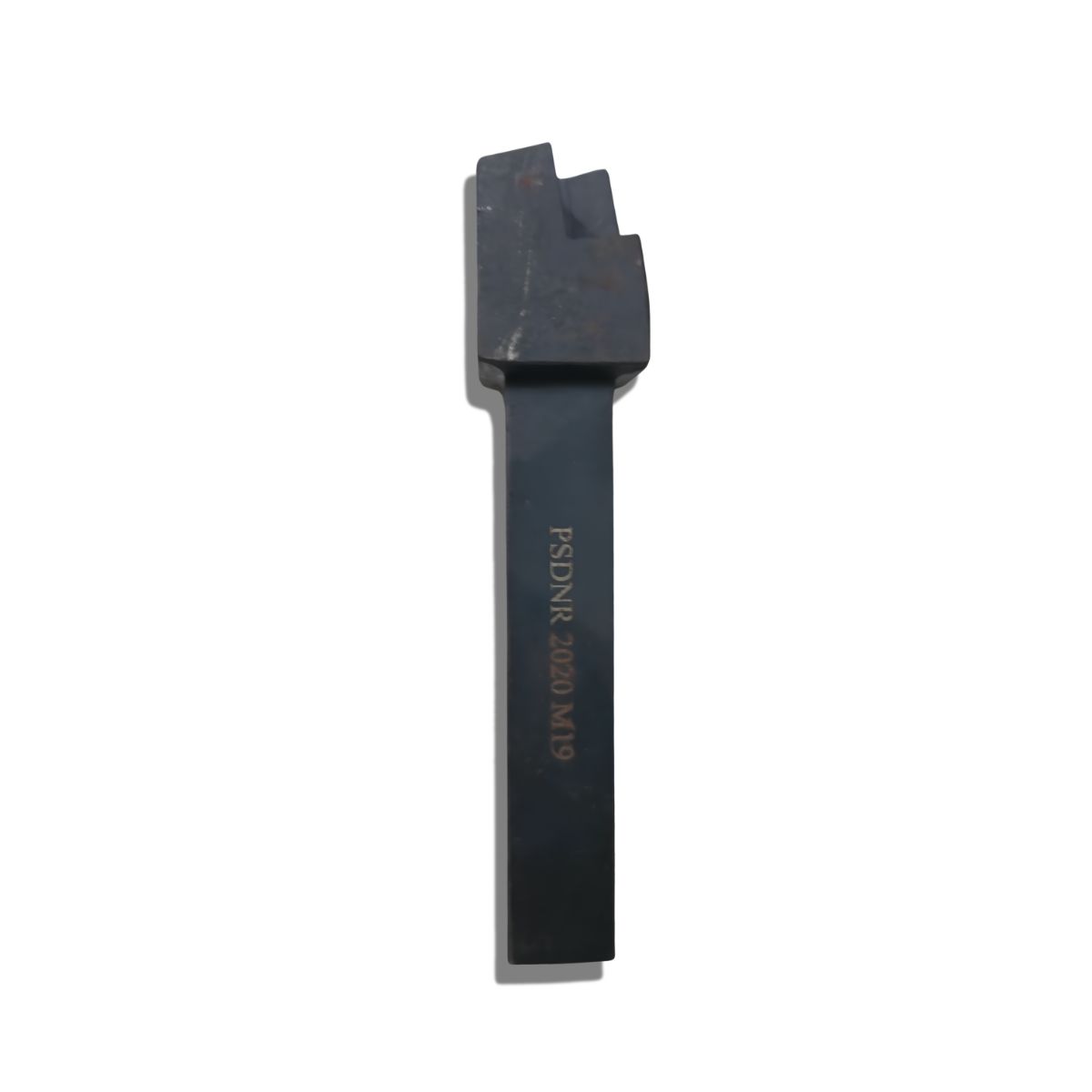
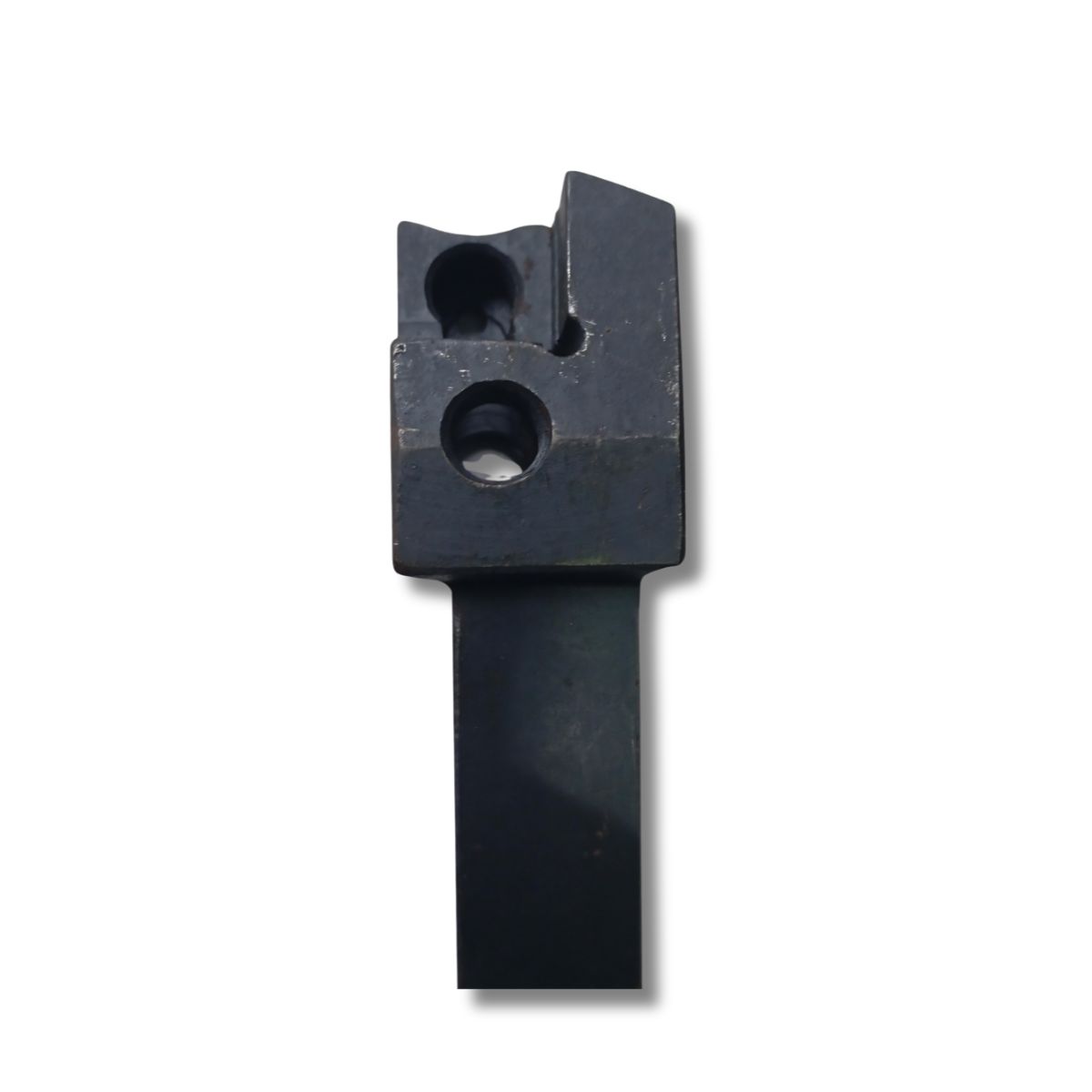
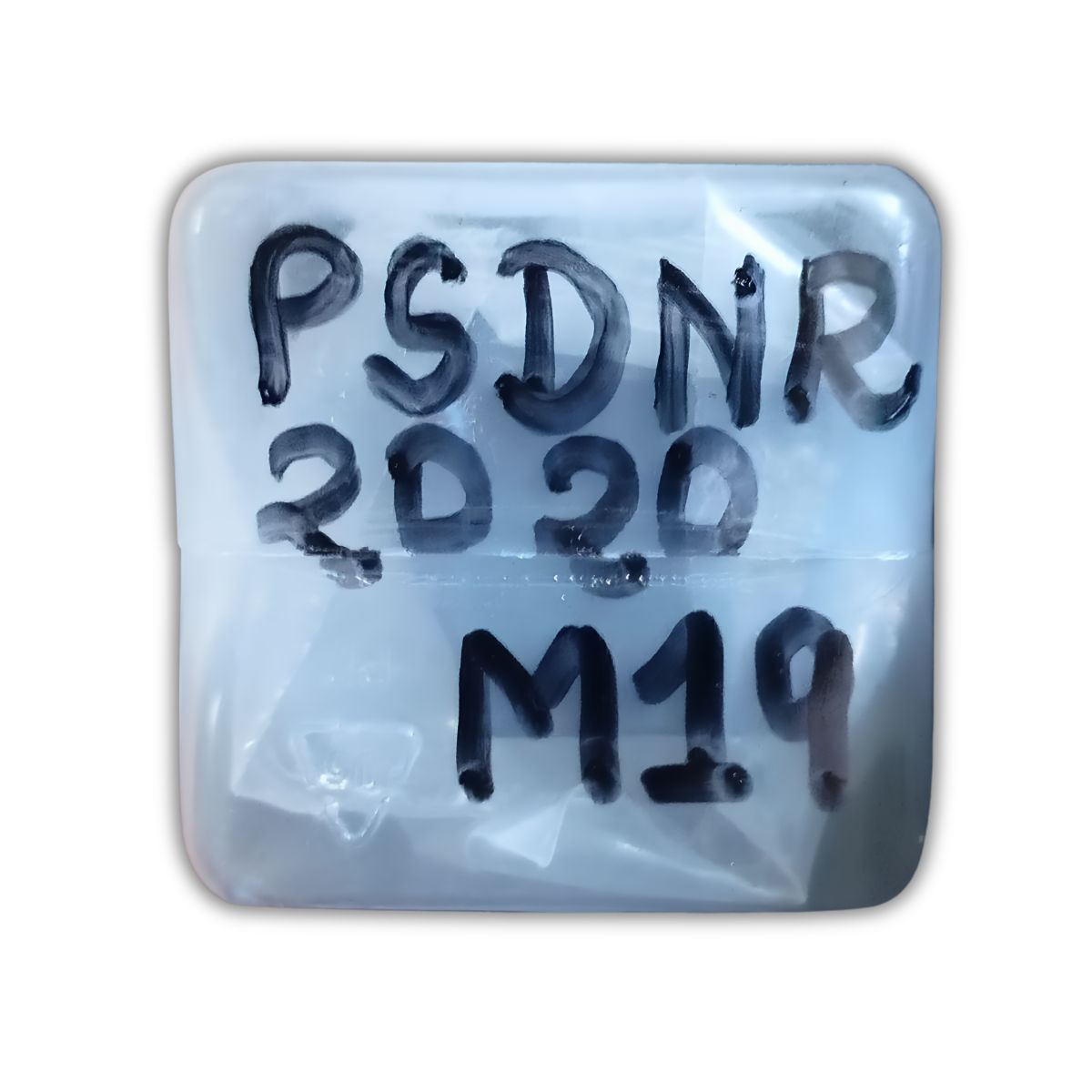
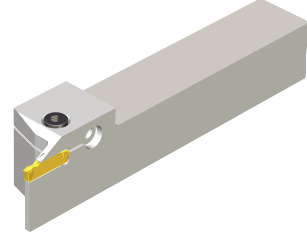
P: Clamping method — uses a rigid Lever Lock system (draws the insert tightly back into the pocket via a lever mechanism).
S: Insert Shape — accepts Square (S) indexable carbide inserts.
D: Tool Style / Lead Angle — features a 45° Approach Angle (Entering Angle), making it ideal for facing, heavy roughing, and chamfering.
N: Clearance Angle — 0° (Negative) rake geometry, providing maximum edge strength and 8 usable cutting edges per insert.
R: Hand of Tool — Right-Hand (R) cutting direction. It moves from right to left toward the chuck/headstock.
2020: Shank Size — The tool shank measures 20mm Height × 20mm Width.
M: Tool Length — The overall length is standard at 150 mm.
19: Insert Size — Designed exclusively to fit heavy-duty SNMG 1906 (19mm cutting edge length) carbide inserts.
PSDNR (Right-Hand) vs. PSDNN (Neutral)
While both share a 45° approach angle and the exact same shank and insert size, they are used differently on the machine:
PSDNN (Neutral): The insert sits centered. It can turn left, turn right, and face. However, it cannot clear walls closely because both sides share equal clearance.
PSDNR (Right-Hand): The tool body is relieved on the trailing side. This provides optimized chip flow and precise clearance when moving right-to-left along a cylindrical part, handling heavy longitudinal roughing with higher stability.
Compatible Insert Specifications
This holder must be paired with SNMG 1906... inserts. Because of the size 19 designation, these inserts are unusually large and thick for a 20mm shank, making this tool an aggressive "heavy-metal remover" for deep roughing passes.
Common insert choices include:
SNMG 190612: Features a 1.2mm corner radius, offering an excellent balance of edge strength and smooth surface finish.
SNMG 190616: Features a heavy-duty 1.6mm corner radius, purpose-built to withstand severe mechanical shocks and interrupted cuts.
If you are choosing inserts or setting up your CNC program, let me know:
Your workpiece material (e.g., Cast Iron, Carbon Steel, Stainless)
The maximum depth of cut (DOC) your machine can handle
Whether your operation involves continuous or highly interrupted cuts.