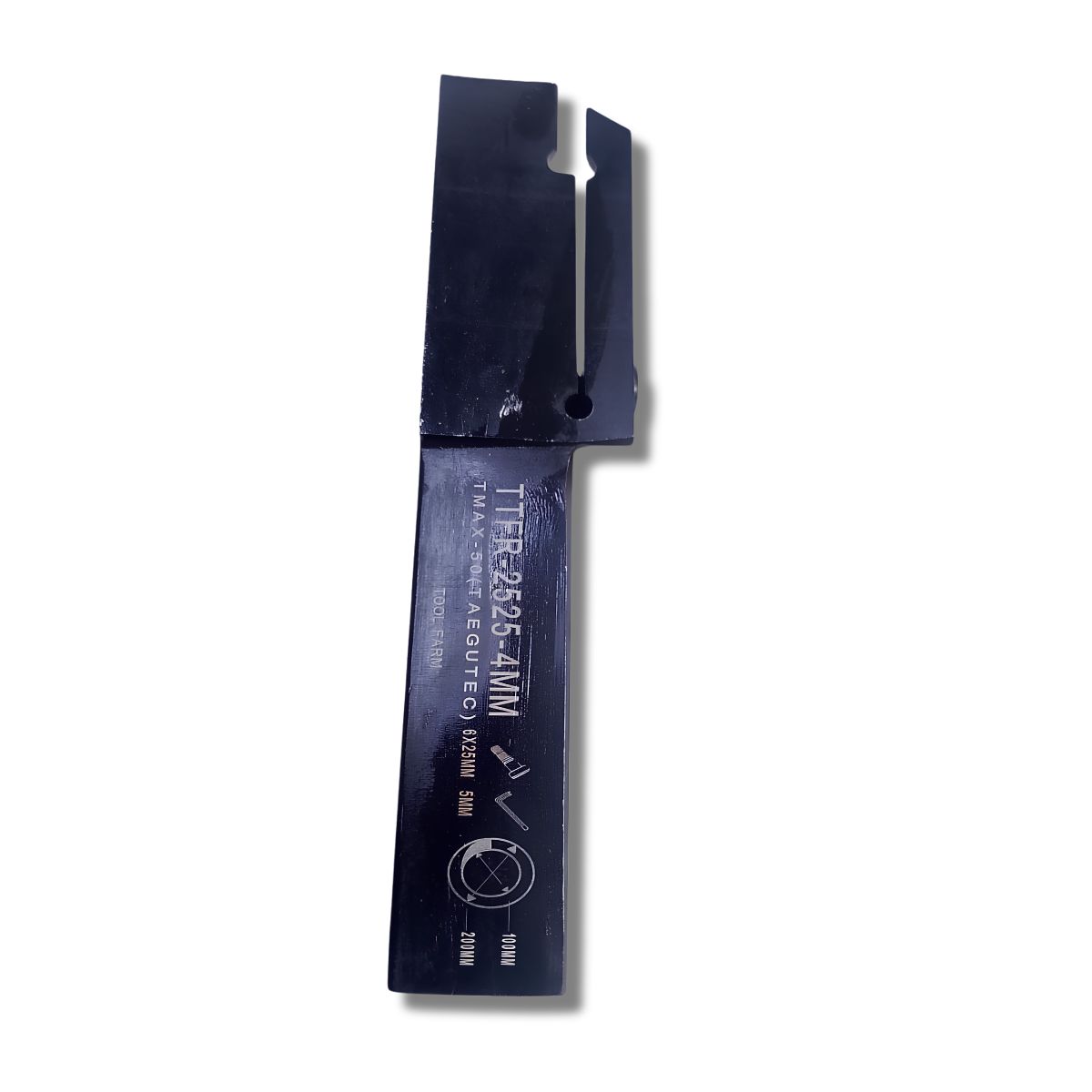
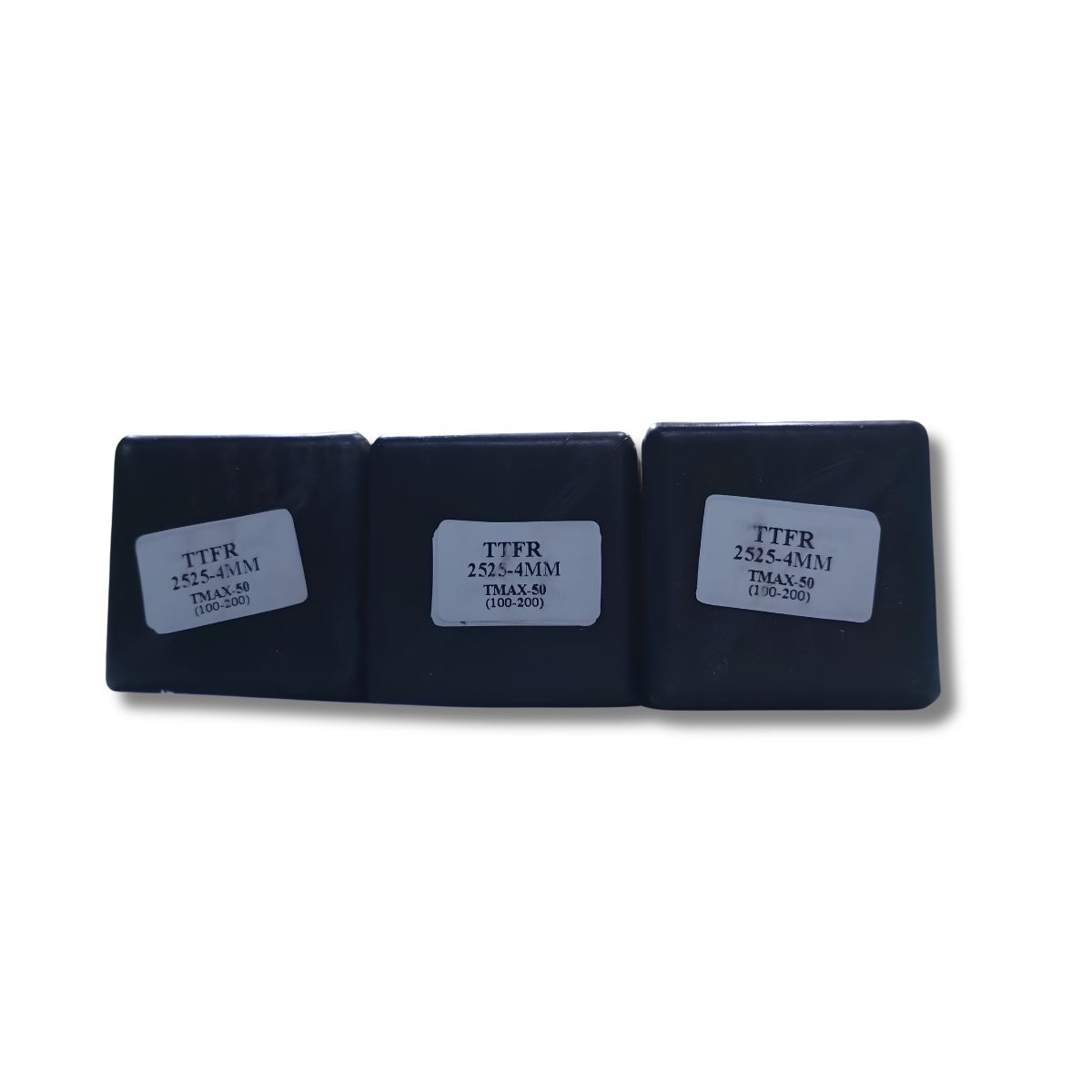
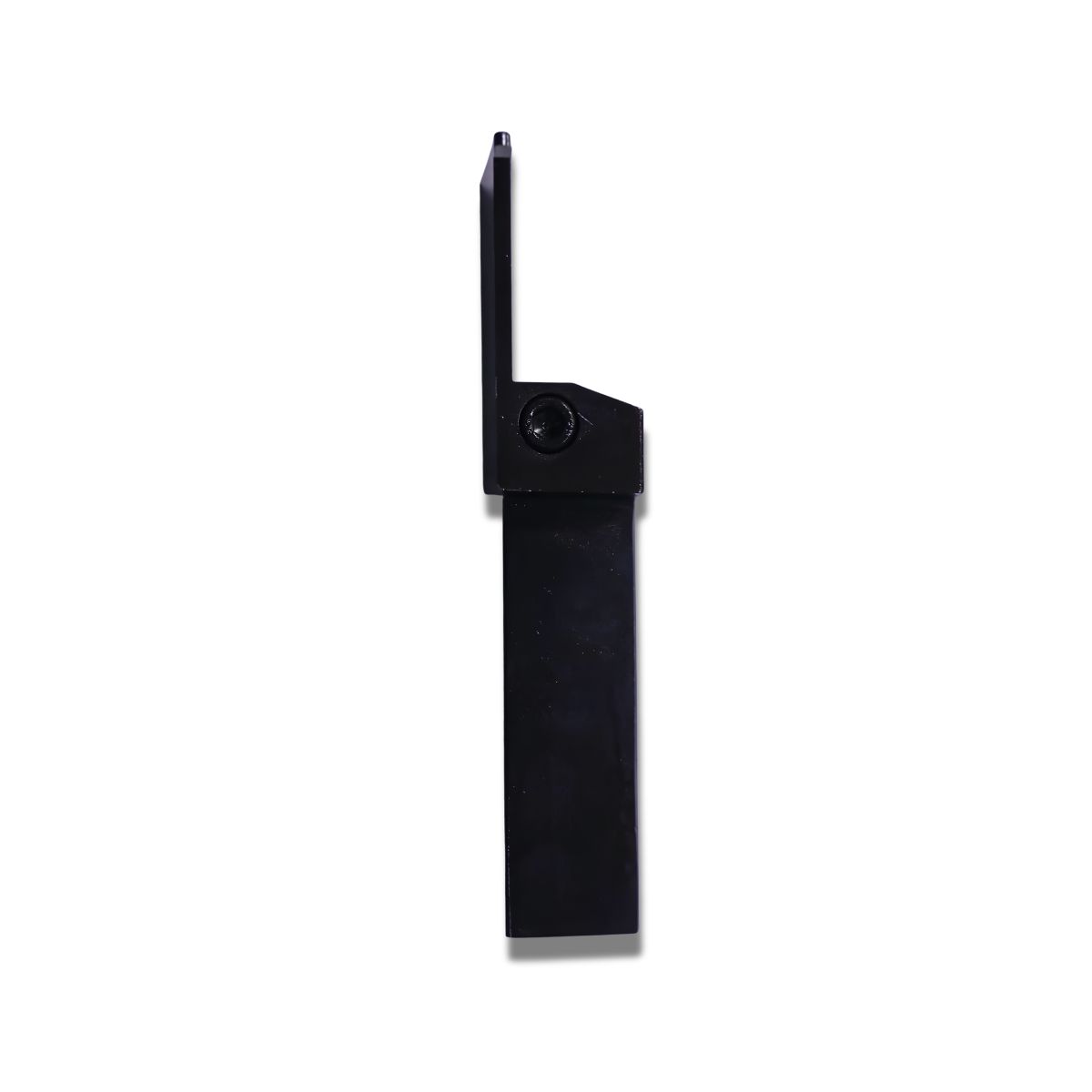
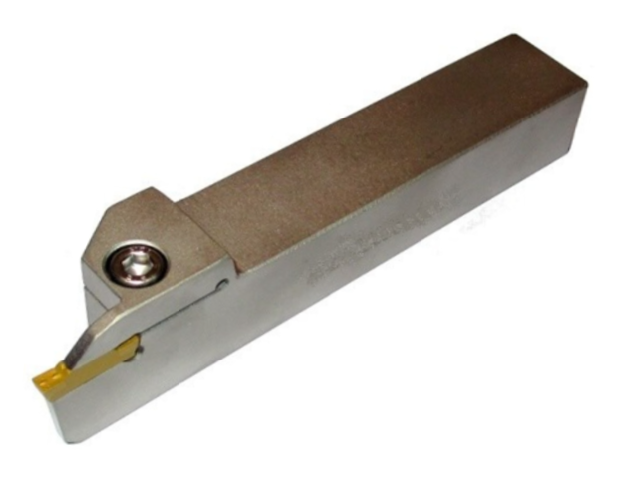
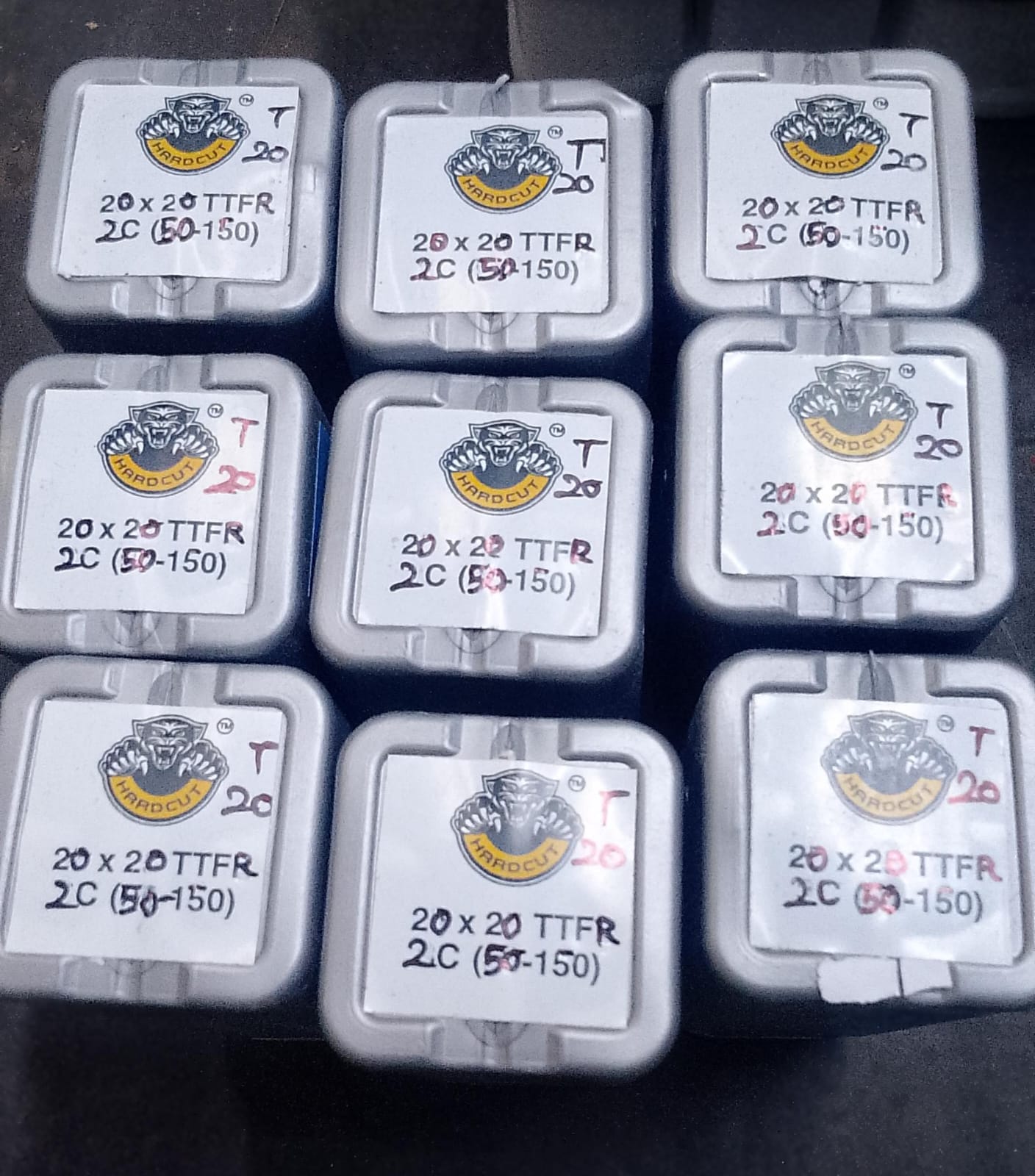
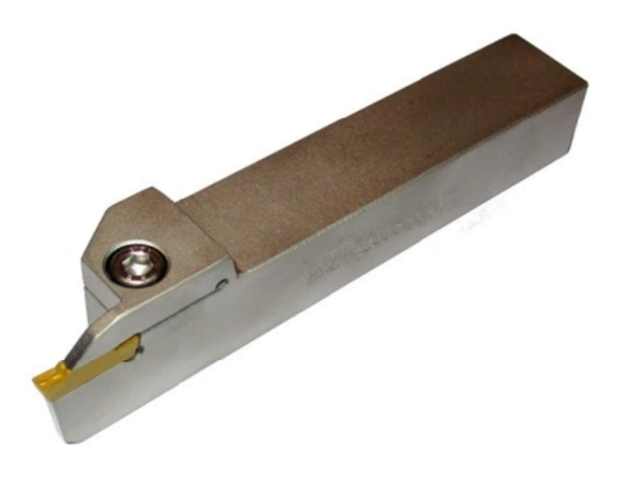
The naming structure outlines the exact functional dimensions and pocket configurations required for proper machine programming:
  TTFR   -   2525   -   4MM (4C)  -  [Txx]  -  [(Diameter Range)]

   |          |            |            |               |
Tool Type   Shank size   Insert Width  Max Depth    Working Face
(Face Groove) (25x25mm)     (4.0mm)     (e.g., T22)   Diameter Range
TTF: Tool category layout designating specialized External Face Grooving / Face Turning operations.
R: Cutting direction orientation. This signifies a Right-Handed cutting tool.
2525: Shank cross-section profile. Features a heavy-duty square shank measuring 25 mm height × 25 mm width, providing maximum structural rigidity against vertical deflection forces.
4MM / 4C: Insert pocket blade width. It is precision machined to hold indexable inserts that create an exact 4.0 mm groove width. [1, 2, 3, 4, 5]
⚠️ Critical Curved Blade Engineering Variable [1] Because face grooving requires plunging directly into a flat radial plane, the blade underneath the insert pocket is physically curved to clear the inner and outer radius of the groove wall without rubbing. Therefore, this tool holder family requires selecting sub-variants based on your workpiece dimensions:
Max Cutting Depth (CDX): Indicated by a "T" suffix (e.g., T22 allows up to a 22mm plunge depth; T35 allows up to a 35mm plunge depth).
Working Face Diameter Range: Marked in brackets on the shank (e.g., 15-50, 50-100, or 100-200). A tool designated for a (100-200) range can only cut grooves whose initial starting diameters fall between 100 mm and 200 mm. Using it below 100 mm causes the curved lower heel of the steel shank to smash into the center hub of the compone