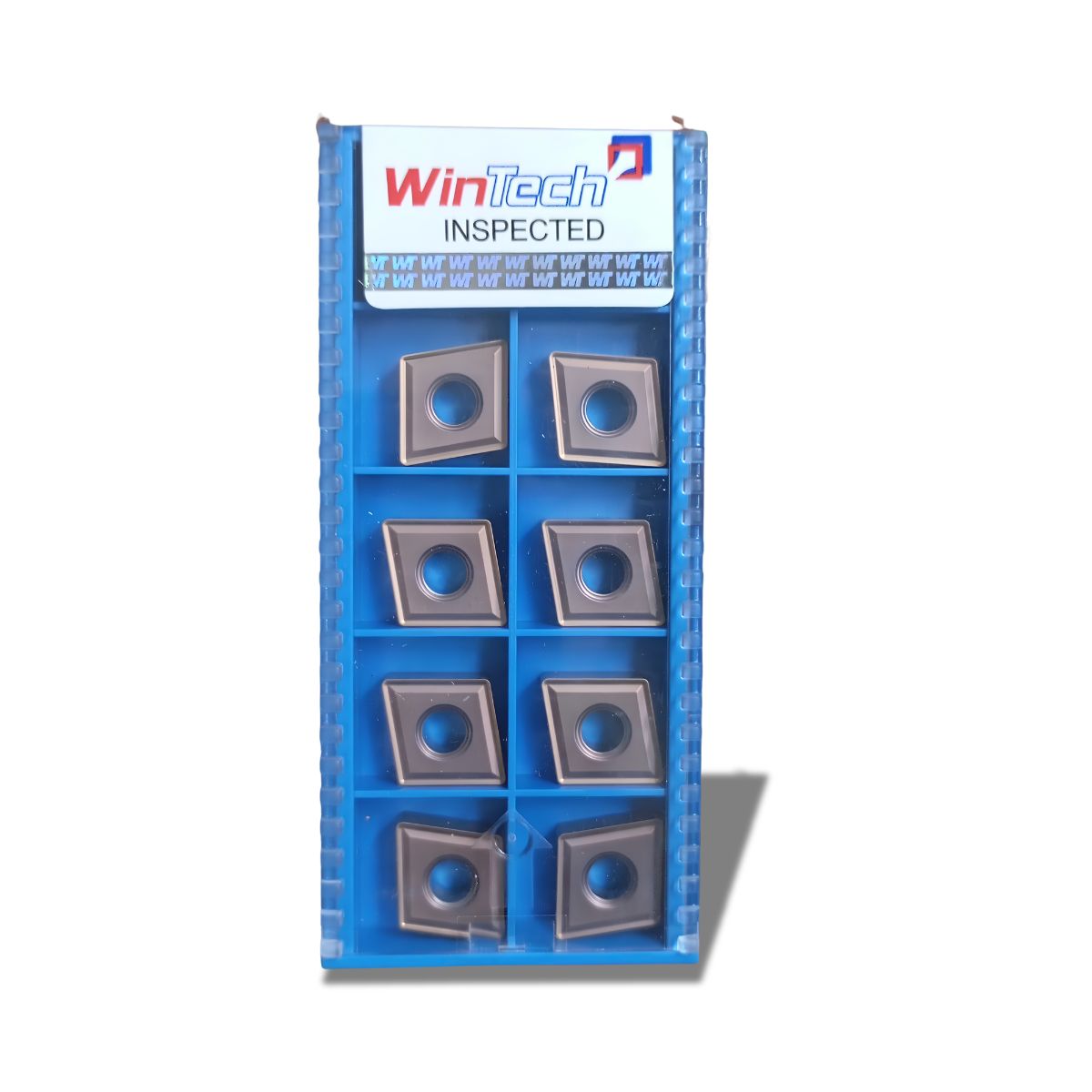
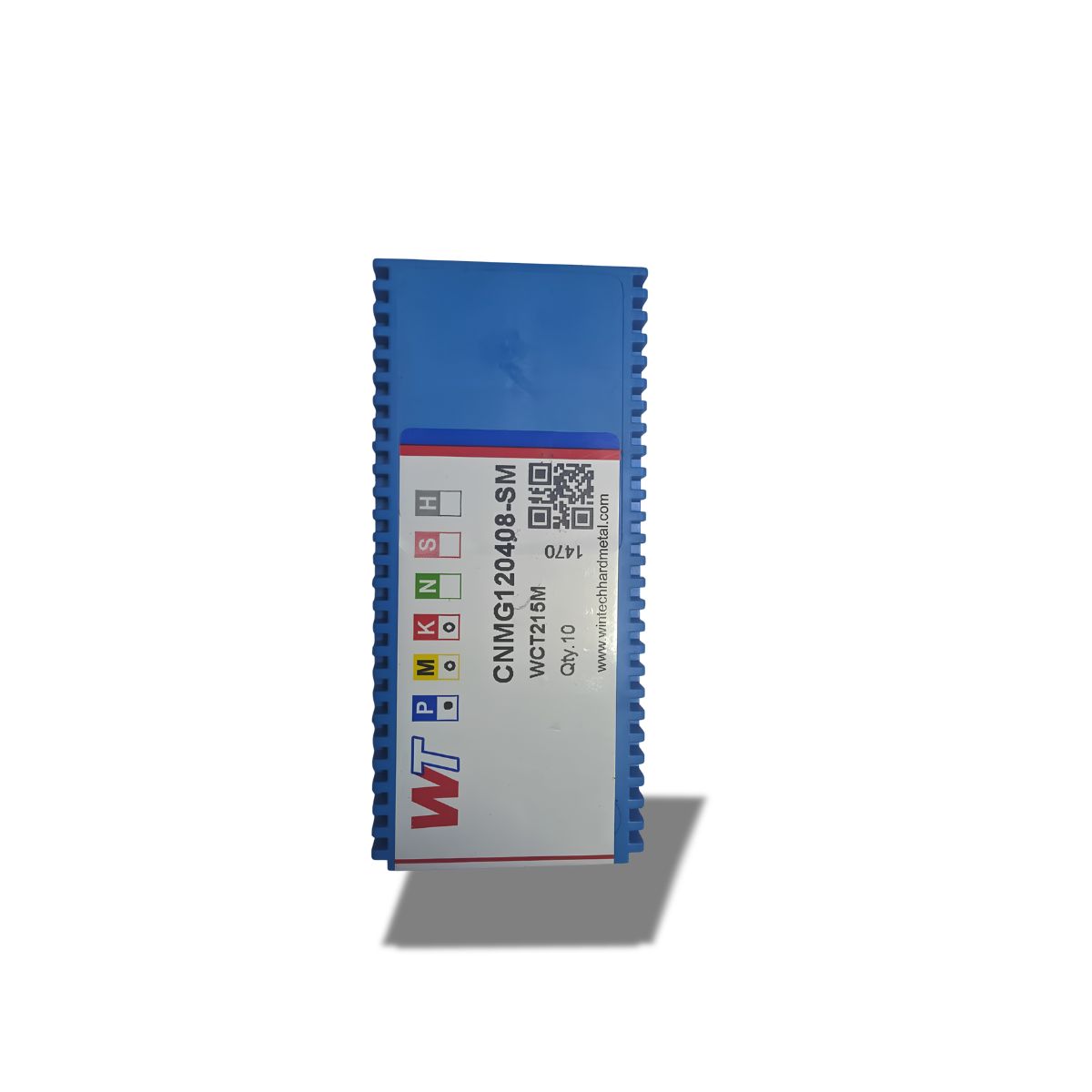
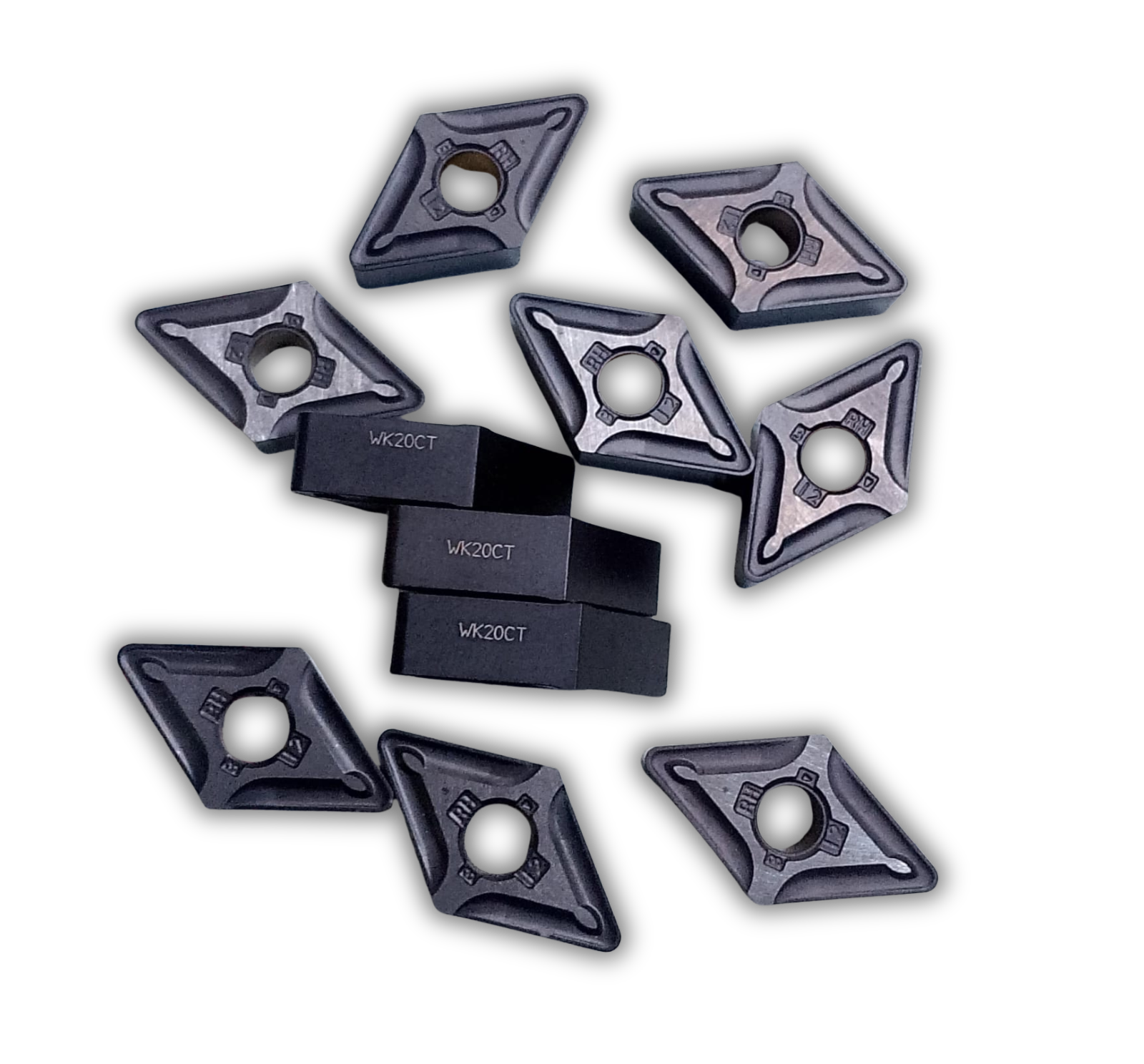
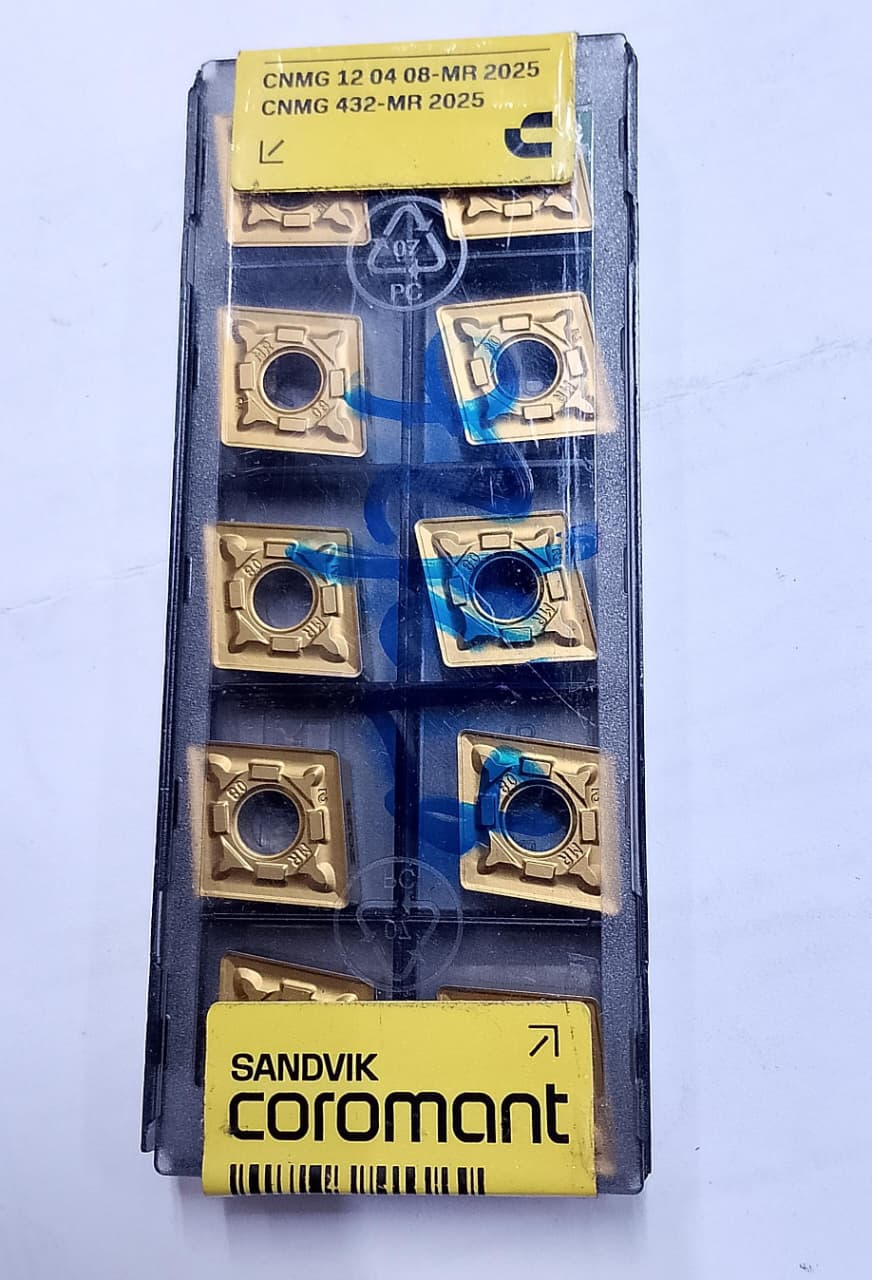
C: Defines the basic shape of the insert as an 80° Rhombic (Diamond) profile. This configuration balances great structural stability for roughing while remaining versatile enough for facing and profile-turning passes.
Palbit
+2
N: Specifies a 0° Normal Clearance Angle (Negative insert layout). This design depends on the toolholder pocket to provide clearance, creating a dual-sided structure that delivers a total of 4 highly stable cutting edges.
Tungaloy Corporation
+3
M: Dictates the universal ISO Tolerance Class (Class M), defining the precision bounds for thickness and index repeatability.
Palbit
+1
G: Designates a central cylindrical clamping hole flanked by double-sided, integrated chipbreaker topographies.
Palbit
+1
12: Indicates the metric Inscribed Circle (IC) size, measuring exactly 12.7 mm (equivalent to 1/2 inch).
Palbit
+1
04: Specifies the total Insert Thickness, which is 4.76 mm.
Palbit
.08 (or 08): Represents the 0.8 mm Corner Nose Radius
), offering excellent resistance against tip fracturing under heavy mechanical stress.
Palbit
+2
-SMW: Identifies the specialized Medium-Duty Wiper Chipbreaker. Unlike conventional radii, a wiper insert introduces a flattened micro-geometry phase along the cutting edge. This design acts like a planer, allowing machinists to double the feed rate
) without degrading the surface roughness
).
Tungaloy Corporation
+1
CT215M: Identifies the manufacturer’s specific PVD or CVD-coated carbide grade line (similar to structural properties found in Nanocut M1020 or Tungaloy T9215 series). This grade combines a hard, cobalt-enriched carbide substrate with multi-layered titanium carbonitride or aluminum oxide coatings to resist heat deformation during medium-speed finish turning.