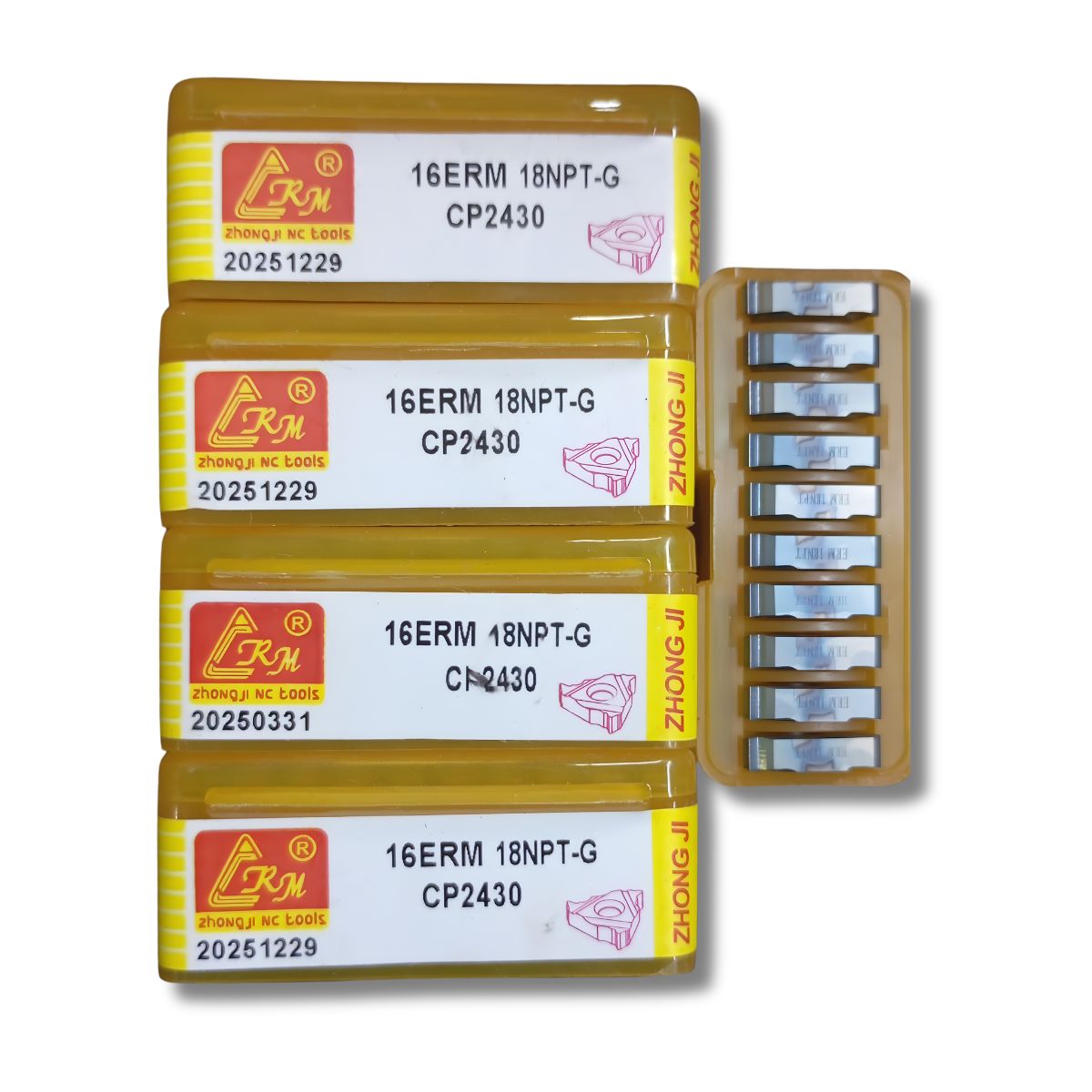
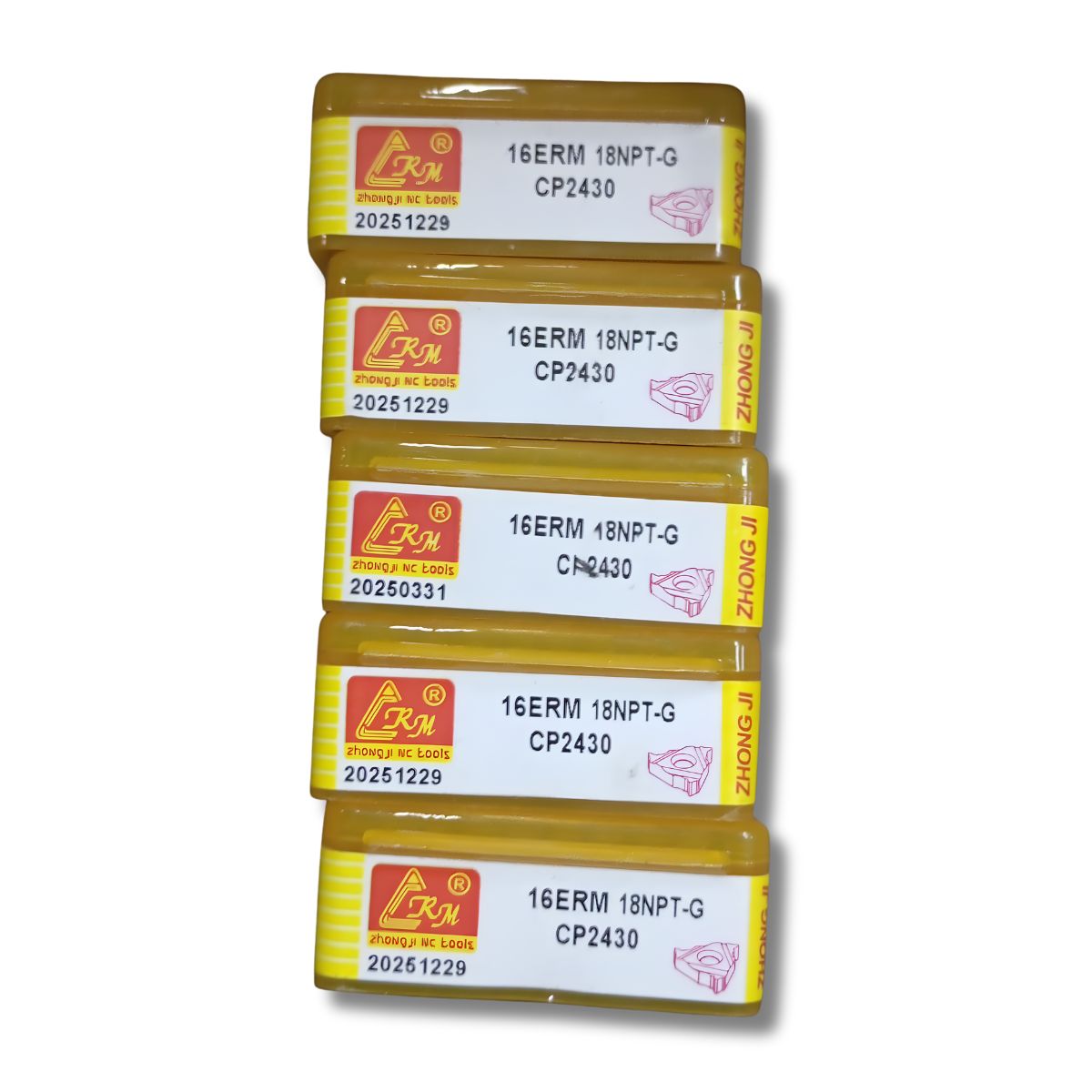
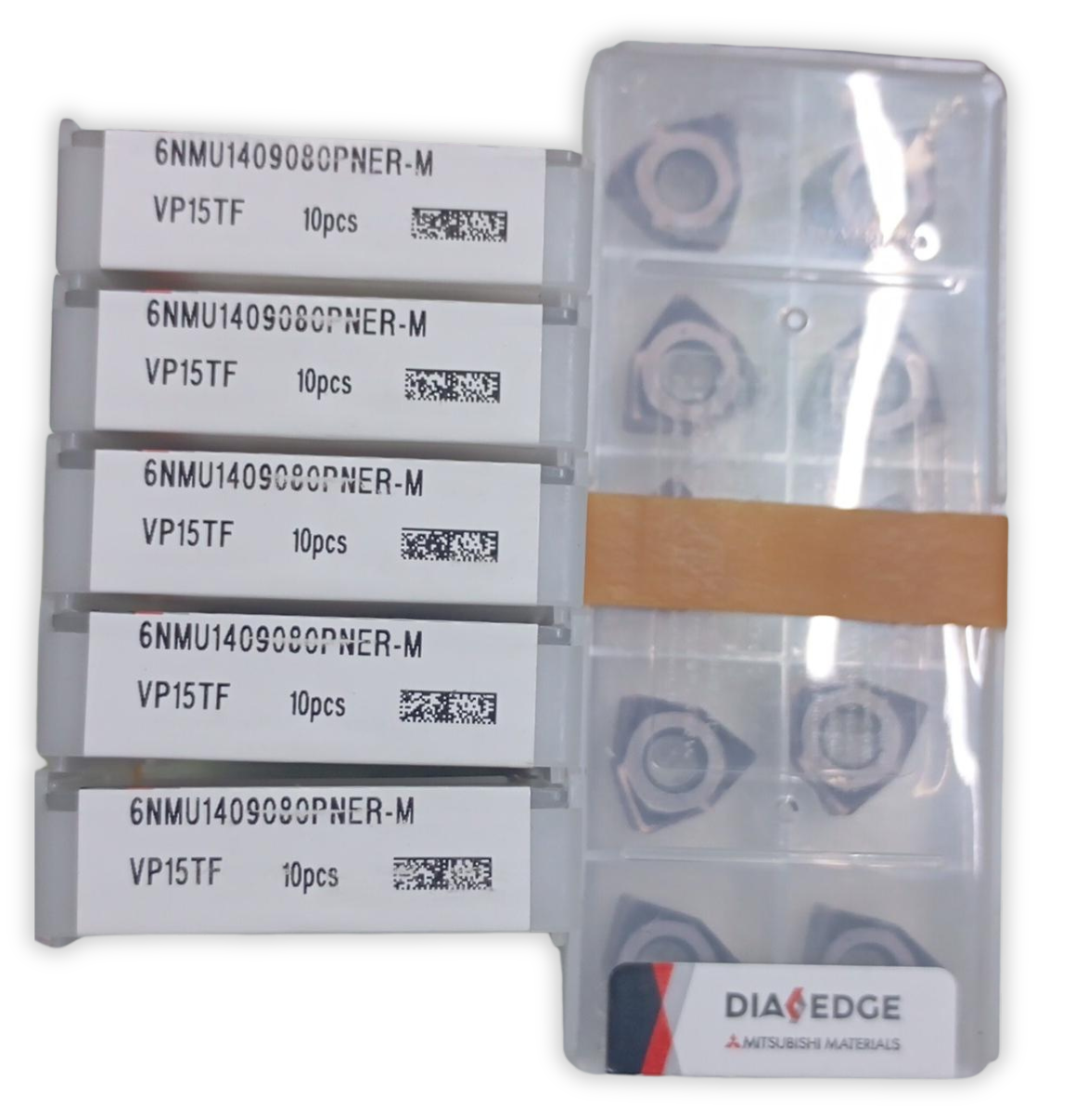
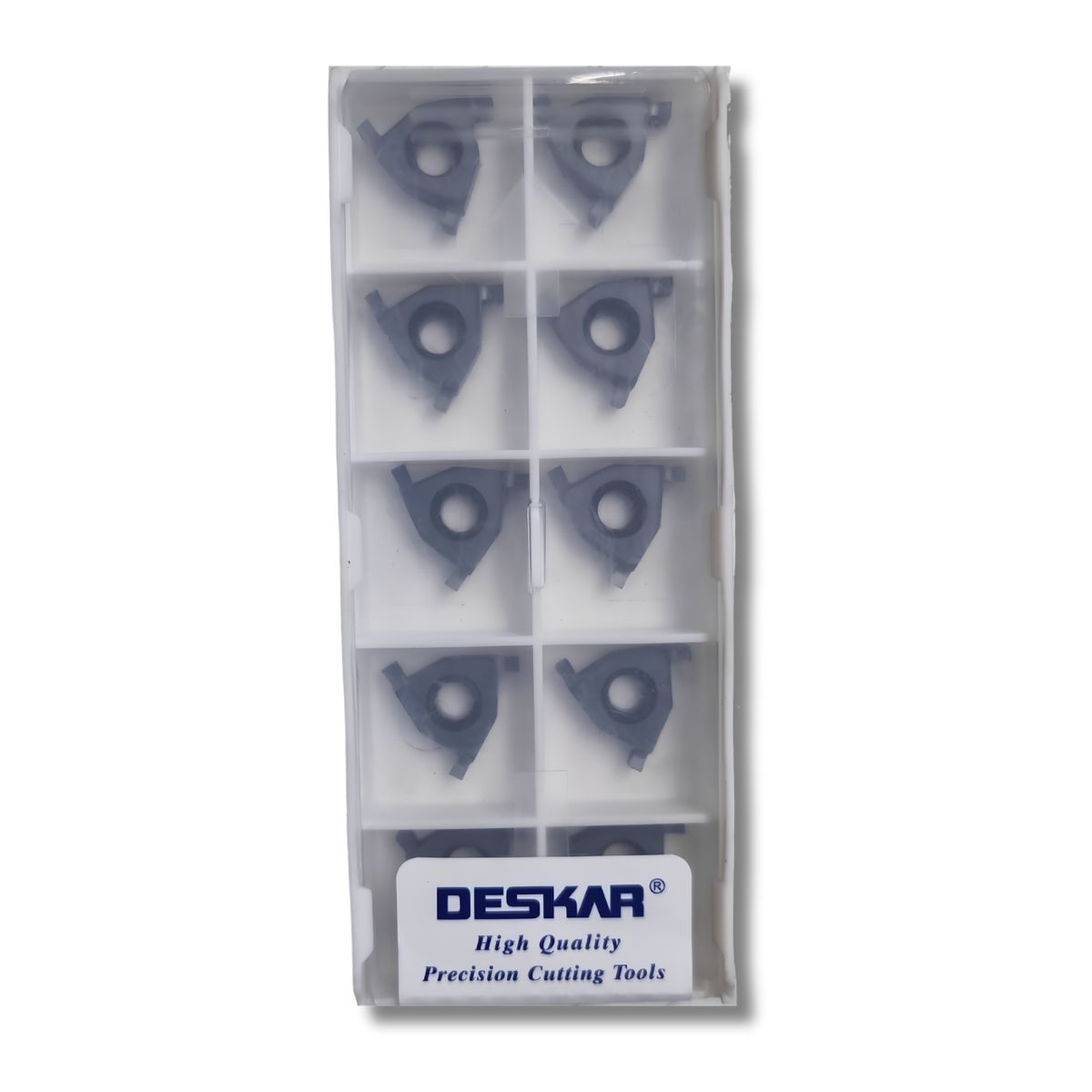
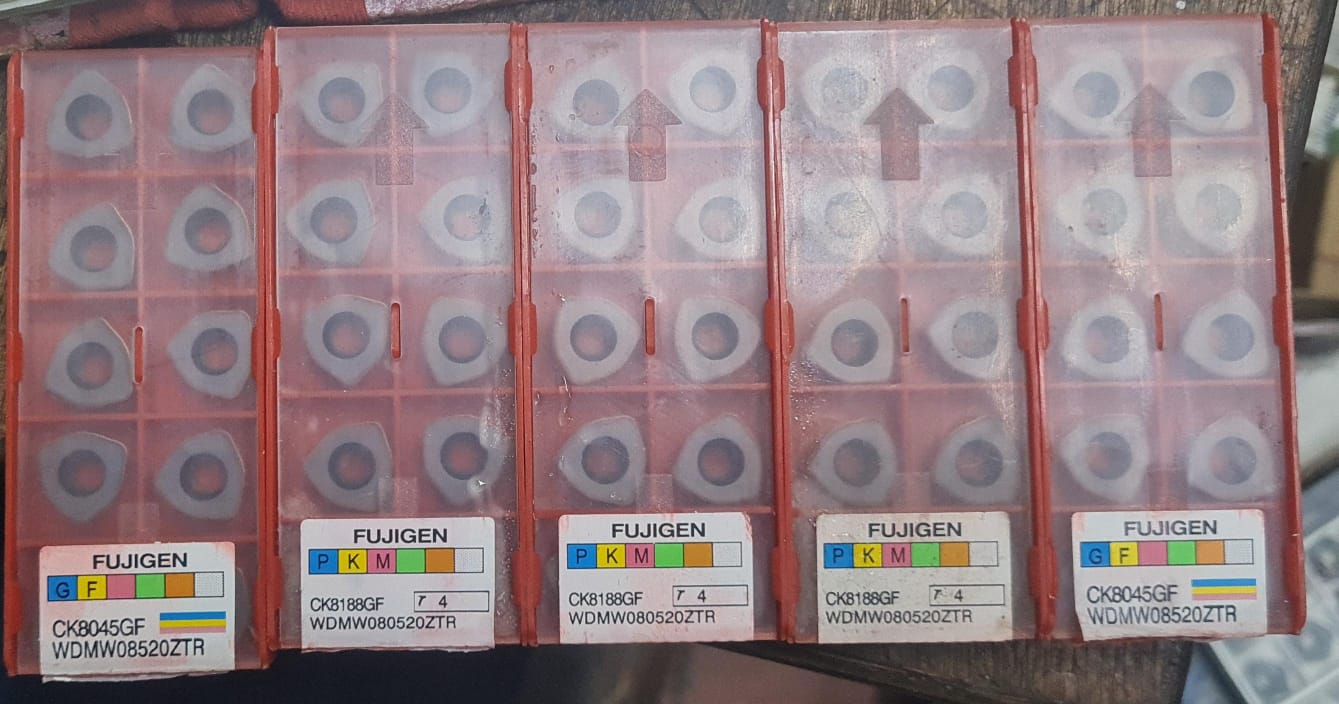
16 (Insert Size): Indicates a 16 mm nominal edge length, corresponding to a standard 3/8" Inscribed Circle (IC) size. This is the global standard layout for laydown thread-turning toolholders.
ER (Application type): External Right-hand cutting orientation. It mounts directly onto standard external threading bars (e.g., SER 2020 K16 or SER 2525 M16).
M (Chipformer Geometry): Features a moulded-in press type chipbreaker. This chipbreaker curls and snaps stringy chips efficiently, preventing long bird-nesting nests that can wrap around the workpiece or mar thread finishes.
18 NPT (Thread Standard): Specifically ground for 18 Threads Per Inch (TPI) National Pipe Taper profile (ANSI/ASME B1.20.1). Because it is a Full Profile variant, it cuts the complete 60° V-shape, truncates the crest, and shapes the root radius concurrently in a single cycle. It is designed to match standard 1/4" and 3/8" nominal pipe sizes.
-G (Tolerance/Class): Indicates a standard ground profile layout to ensure optimal pitch accuracy and precise crest alignment.
Carbide Grade Properties (CP2430)
The CP2430 grade is a highly popular, universal-application PVD multi-layer (TiAlN + TiN) coated carbide grade.
Substrate: High-toughness submicron matrix designed to resist thermal cracking during multi-pass threading.
Target Application: Highly versatile across Steel (ISO P), Stainless Steel (ISO M), and hard Cast Iron (ISO K). It excels at suppressing built-up edges (BUE) when threading gummy materials like austenitic stainless steel.
Programming & Setup Tips
To prevent premature edge chipping with full-profile NPT inserts, consider these standard programming adjustments:
Infeed Method: Utilize a Modified Flank Infeed (3° to 5° angle) rather than a straight radial plunge. This forces the chip to flow over a single cutting flank, drastically reducing load and vibration.
Pass Calculation: An 18 TPI NPT thread typically requires 6 to 9 total passes depending on the workpiece hardness, with depth diminishing dynamically on each subsequent pass.